South Asia is home to nearly a quarter of humanity, and it is growing faster than almost anywhere else on earth. That growth has a cost written into its rivers and along its coastlines: plastic, more of it every year, outpacing the systems built to manage it. South Asia’s waterways that have sustained civilizations for millennia such as the Ganges, Indus, Brahmaputra and the Indian Ocean now carry the debris of modern consumption out to sea, threatening the fish stocks, the coastal economies, and the millions of livelihoods built around them.
But this region has also long known how to make do with less, repair instead of replace, and put little to waste. That instinct, scaled and modernized, is what PLEASE set out to test.
Over five years, across eight countries, the Plastic Free Rivers and Seas for South Asia project worked at every level where plastic pollution begins and ends: in policy rooms, in factories, in informal waste markets, on riverbanks. It backed the people closest to the problem: innovators redesigning packaging, communities intercepting waste before it reached the sea, institutions learning to work across borders instead of in isolation.
By 2026, that work had reached 28 grantees, moved 16m Kgs of plastic out of the waste stream, and touched the lives of more than 11 million people.
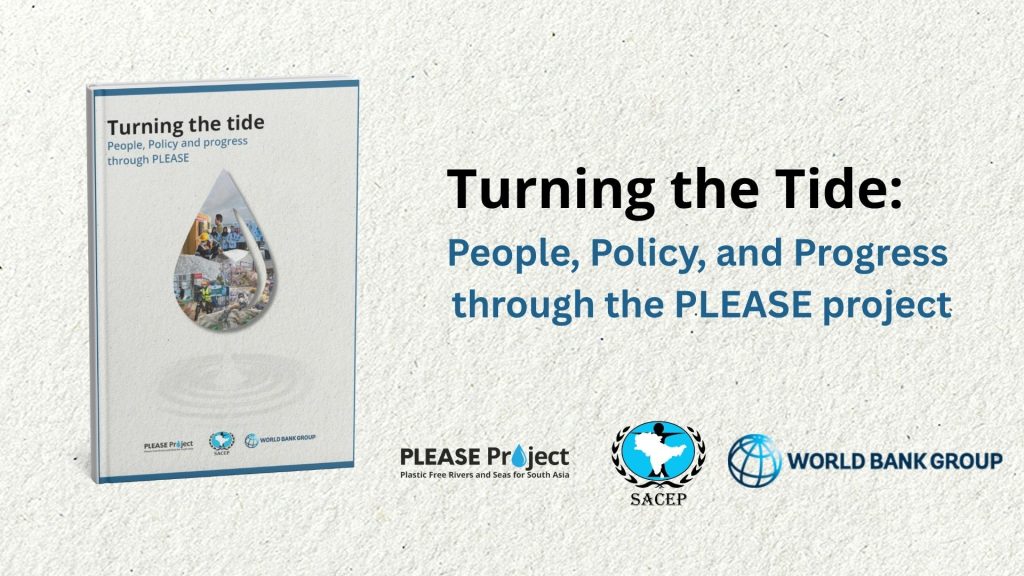
What follows are their stories: country by country, grant by grant, idea by idea. Explore them below, or read the complete publication for the full picture of what a region can do when it decides plastic pollution is solvable.